
Lithium batteries and storage for substations and grid assets
The problem
Lead in substation DC systems: short life, invisible state of health, a room of its own.
What we install
Lithium batteries in the 220 V class for DC switchboards, retrofit diagnostics of existing strings, a digital logbook.
- Batteries 224 V 100 Ah
- DC-system diagnostics module
- IEC 61850 out of the box
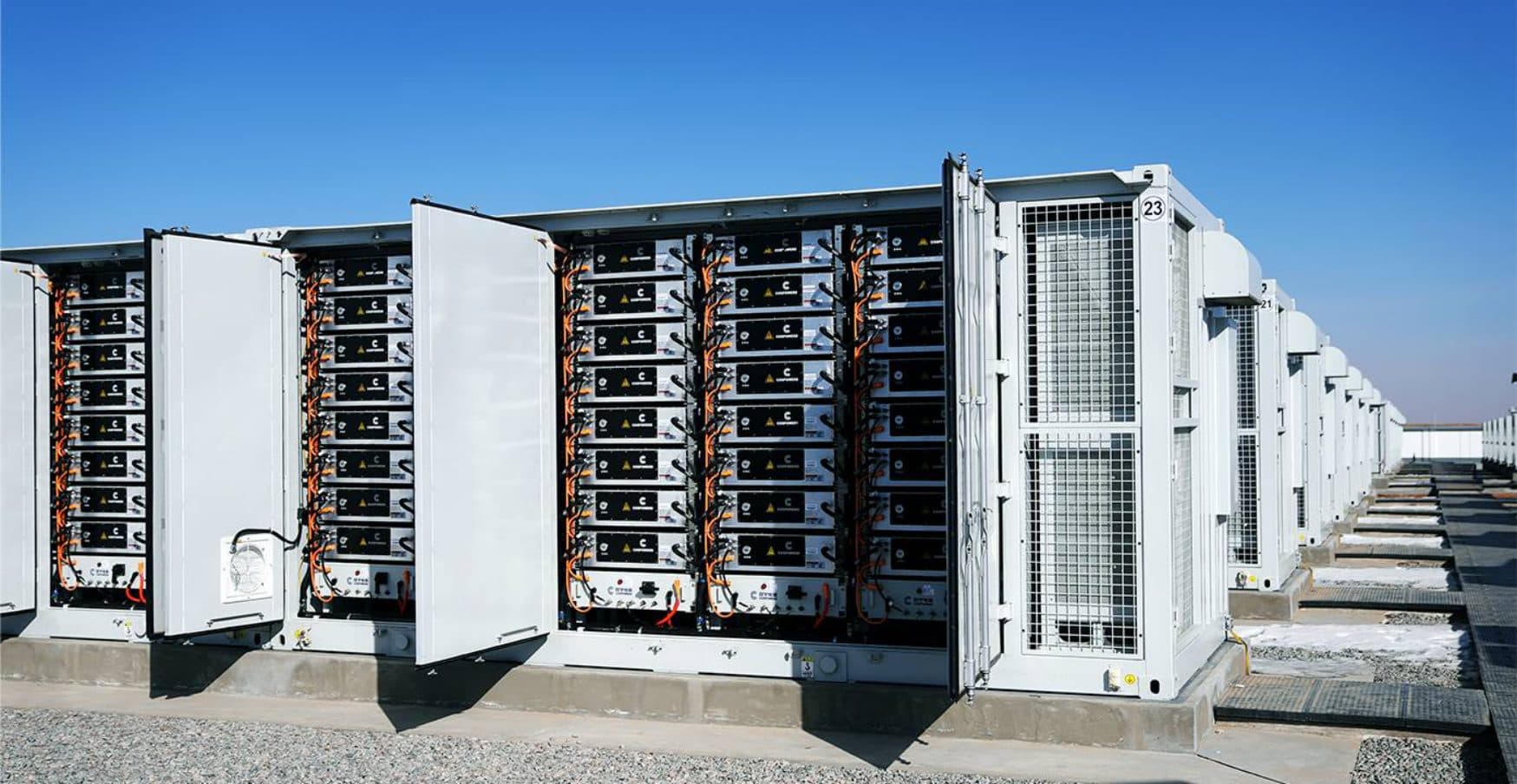
What drives the equipment selection
The DC auxiliary system is the most conservative part of a substation, and rightly so: protection relays and breaker drives depend on it. Lead strings here are replaced on a calendar, not on condition, because nobody can see the condition — a capacity test is run rarely and wears the battery out in the process.
Lithium solves two problems at once: service life and observability. A string with per-cell monitoring reports degradation before it fails rather than after. Across a fleet of hundreds of substations that is the shift from “replace by calendar” to “replace what has actually aged”.
A separate use case is grid storage: load levelling, voltage support at the end of a long feeder, backup during switching operations. Connection to a 6/10/35 kV network is made through a power conversion block.
What we need for a calculation
- Voltage class of the DC switchboard and the applicable standard
- Currents and duration for the breaker drives
- Composition and age of the existing battery strings
- Room conditions: heating, winter and summer temperatures
Suitable equipment
How we work
Engineering audit
We go through the specification and the site: load category, required autonomy, operating conditions, what is already installed.
Sizing and selection
We size the battery against the real discharge profile — not “with a margin, by eye”. You get 2–3 options with different economics.
Supply and commissioning
Delivery from stock or to order, installation, commissioning, training for your operations team.
Service and monitoring
Warranty and post-warranty service, remote condition monitoring, replacements scheduled on actual condition.
Frequently asked questions
Are there lithium batteries that match substation DC voltage requirements?
Yes. The range includes a 220 V class design (224 V, 100 Ah, 22.4 kWh) — that is the one that fits a DC switchboard, whereas the 384–614 V designs are intended for UPS buses.
Can diagnostics be fitted to existing lead strings?
Yes, and it is a use case in its own right: the diagnostic loop is installed on a working string without replacing it and reports its condition. It is a fast entry point with no capital spend, and a way to justify replacement with numbers.
Site energy audit — free of charge
Send us the data from the checklist above — we will return a calculation with layout options, dimensions and site requirements. Usually 3–10 working days.